



Researchers at the University of Queensland have developed a new electrochemical generator capable of converting captured CO2, water, and electricity into valuable industrial chemicals, offering a potential low-emissions alternative to fossil-fuel-based chemical production.
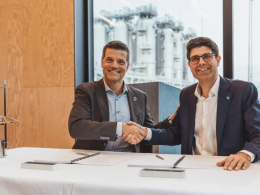
Developed by Professor Xiwang Zhang, Dr Mike Tebyetekerwa, and PhD student Rizal Evans from UQ’s School of Chemical Engineering, the technology produces formate (the base compound for formic acid) using only captured CO2, water, and electricity.
The team says the system could help industrial emitters transform waste carbon into commercially valuable products while reducing dependence on traditional petrochemical manufacturing pathways.

Formic acid is widely used across agriculture, leather tanning, rubber manufacturing, textiles, pharmaceuticals, and other industrial sectors. Australia currently imports most of its formic acid supply, creating vulnerability to global supply disruptions.
According to the researchers, the generator was designed with a modular architecture, allowing it to be scaled according to industrial demand and potentially deployed directly at industrial facilities.
Professor Zhang said the project demonstrates that carbon dioxide can be treated as a reusable feedstock rather than solely as a waste product, creating opportunities to connect industries requiring formic acid with sectors seeking carbon management solutions.
Relevant: China Develops First Reactor To Convert Ocean CO2 Into Biodegradable Plastics
Dr Tebyetekerwa added that producing formic acid on-site could reduce transportation and storage risks while improving supply chain resilience and lowering associated emissions.
The researchers also highlighted potential applications across agriculture, mining, energy, and resource industries. One resource company has already reportedly expressed interest in using the technology to produce formic acid for use as an antifreeze in industrial pipelines.
While the system remains in the testing phase, the team said future field trials with industry partners will be needed to evaluate commercial performance under real-world operating conditions and adapt the technology for different industrial applications.
The research is supported by the Australian Research Council through its Centre of Excellence for Green Electrochemical Transformation of Carbon Dioxide initiative.
Read more: Fluor’s Energise The Future 2026 Brings Together Europe’s CCU And SAF Ecosystem