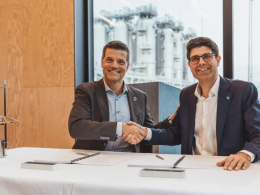





At an event in Austin, the US Environmental Protection Agency (EPA) and the Texas Railroad Commission (RRC) formalized a memorandum of agreement (MOA) that advances Texas’s bid to regulate carbon dioxide storage wells, known as Class VI wells.
This agreement marks a crucial milestone in the RRC’s application to assume permitting responsibilities for these wells within the state. The EPA is now preparing to issue a proposed decision on granting that authority.
The MOA is part of the process established under the Safe Drinking Water Act, which governs the protection of underground drinking water sources.
“Through their administration of other underground injection control programs, the Texas Railroad Commission has demonstrated the ability to protect Texas’s drinking water while overseeing a variety of drilling and injection activity,” said Regional Administrator Scott Mason.
“The RRC is pleased with the partnership we are establishing with EPA Region 6 under the leadership of Administrator Scott Mason. We welcome and appreciate this collaboration with Region 6, the EPA and the White House and stand ready to further engage in building on our established successes,” said Wei Wang, Executive Director, Railroad Commission of Texas.
To take control of Class VI permitting, the RRC must demonstrate it can uphold the technical standards and oversight requirements necessary to ensure safe carbon storage.
Relevant: Occidental And 1PointFive Secure EPA Class VI Permits For Stratos DAC In Texas
The agency already manages similar programs for other types of underground injection wells, having previously received delegated authority from the EPA.
Class VI wells are designed to permanently store carbon dioxide deep below the Earth’s surface in suitable rock layers.
These geological formations are carefully analyzed to confirm their ability to safely contain CO2 over long periods. The wells play a central role in carbon capture and storage (CCS) strategies, helping to reduce atmospheric emissions by isolating captured CO2 underground.
Scott Castleman of the Houston CCS Alliance commented: “We’re very pleased to see the EPA and the Texas Railroad Commission sign this Memorandum of Agreement, a critical step toward advancing Class VI Well Primacy in Texas. We continue to urge the EPA to grant primacy without further delay, enabling industry to move forward with carbon capture and storage (CCS) projects safely and efficiently across the state.”
“These projects will create new markets for Texas industry to supply lower carbon products that keep them competitive in the global market, drive economic growth and support American energy production. Carbon capture and storage has broad bipartisan support because of the opportunity to create jobs and improve quality of life in our state.”
Read more: EDF Renewables North America Partners With Skytree And Return Carbon On New Texas DAC Park