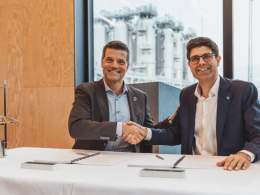
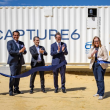




A three-way industry partnership is exploring whether the UK’s north-west could host a new logistics corridor for captured carbon. Stanlow Terminals, backed by Essar Energy Transition, has signed a collaboration agreement with Spirit Energy and Progressive Energy to assess the commercial and technical case for a CO2 capture, shipping and storage chain anchored at Stanlow.
The proposal centres on developing CO2 import terminals at the Tranmere site within the Port of Liverpool and at the Stanlow Manufacturing Complex.
Under the concept being studied, captured emissions from industrial sites across the UK could be shipped into Merseyside and routed onward to offshore geological storage, including Spirit Energy’s planned Morecambe Net Zero development in the East Irish Sea.
Building a CCS logistics spine for the region
The initiative fits into a broader strategy to reposition Stanlow as a low-carbon industrial hub. The site is already integrated into HyNet North West, where CO2 from refinery processes is earmarked for permanent storage via the Liverpool Bay system.
The new shipping concept would extend that infrastructure beyond local emitters, effectively turning Stanlow into a reception point for captured carbon from further afield.
Backers argue the model could help protect industrial employment while creating demand for new port, pipeline and storage services across the region.
Relevant: UK Govt Allocates $63M To Cut Industrial Carbon Emissions
It also aligns with Essar’s multi-billion-dollar transition program at Stanlow, which aims to shift the complex from conventional refining into a platform for low-carbon fuels and carbon management services.
Still, the partnership lands against a tougher political and economic backdrop. Recent cancellations and delays across UK hydrogen and CCS schemes have underlined the sector’s reliance on public support and regulatory certainty.
Critics argue that while carbon capture is increasingly framed as an industrial lifeline, the pace of delivery has yet to match the scale of the promises being made, leaving unresolved questions about how quickly these projects can move from feasibility studies to bankable infrastructure.
Read more: Campaigners File Lawsuit Against HyNet Carbon Capture Project