This week, Austrian company sequestra marked a major milestone by launching the world’s first laboratory for carbonation analytics in Vienna.
The first-of-its-kind facility will perform testing and evaluation operations to determine how much CO2 can actually be bound in slags, ashes, and construction debris.
sequestra is embarking on this new chaper months after securing $3.4 million (€3 million) in a seed funding round led by VSE Beteiligungs-GmbH, which is supported by the Dr. Rudolf FRIES Familien-Privatstiftung.
To evaluate the CO2 uptake across different materials, the innovative laboratory will leverage an analytics platform called Luma, developed by sequestra.
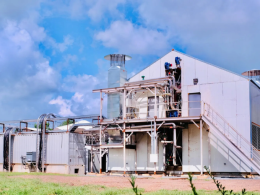
In parallel with the lab launch, the company is also advancing the construction of its first industrial plant set to run at its Attnang-Puchheim site.
sequestra specializes in technologies that permanently bind carbon dioxide in industrial mineral residues and primary materials through mineralization processes.
Mineralization is said to hold a great CO2-curbing potential due to the vast quantities of mineral by-products generated from industries worldwide each year. Scientists have quantified this potential, stating that mineralization could prevent the emission of up to 4 gigatons of CO2 annually.
This prospect is what is currently motivating many industrial companies to investigate the real CO2 uptake capacity of their materials, and this is exactly the need that sequestra’s laboratory can answer.
Relevant: Sequestra Locks In Over $3M To Advance Carbon Mineralization
The testing approach at sequestra’s laboratory
The laboratory measures the real CO2 uptake, as well as the additional material characteristics needed to assess the technological and monetary potential of slags, ashes, and construction and demolition waste.
According to sequestra, its proprietary Luma platform delivers unprecedented insight into the reactivity of the residual materials assessed through fully automated test series, upstream and downstream material analysis, and algorithmic data interpretation.

The test results interpretation is led by chemist Matthias Ginterseder, a research alumnus from ETH Zurich and MIT, who was recently appointed as sequestra’s Chief Scientific Officer.
Looking ahead, sequestra aims to establish its measurement methods and analytical technologies as the industry standard for verifying permanent CO2 mineralization.
The company will also focus on launching its first industrial-scale carbon capture plants by the end of 2027.
Read more: Arca And Carbon Direct Team Up On Scaling Industrial Mineralization