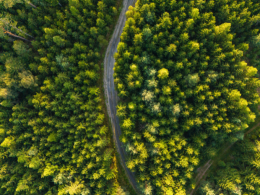
The planet’s natural defenses against climate change are faltering, with forests, soils, and oceans absorbing less carbon than expected, threatening to derail global climate targets, a new scientific report warns.
The 10 New Insights in Climate Science report—authored by more than 70 scientists from 21 countries and released ahead of the 30th United Nations Climate Change Conference (COP30), taking place in Brazil next month—finds that the capacity of land and ocean carbon sinks is weakening as rising temperatures accelerate.
Forests and soils in the Northern Hemisphere are under particular stress, while marine heatwaves are eroding the ocean’s ability to absorb carbon dioxide (CO2).
The scientists caution that while carbon removal technologies are critical, large-scale land-based projects could compete with agriculture and biodiversity.
They argue that reliance on nature alone is risky and that “novel,” or technology-based, carbon removals must complement deep emission cuts.
Relevant: Nations’ Overreliance On Carbon Removal Could Undermine Climate Goals, Oxford Study Finds
“We’ve long relied on forests and soils to quietly clean up our carbon mess—but their capacity is faltering,” said Sabine Fuss of the Potsdam Institute for Climate Impact Research, a member of the report’s editorial board.
The report, a joint effort by Future Earth, The Earth League, and the World Climate Research Programme (WCRP), urges policymakers to base decisions at COP30 on the latest science rather than outdated assumptions.
Johan Rockström of The Earth League said “COP30 must be the COP of implementation,” emphasizing the need to move from pledges to action.
“The focus for policymakers must be on cutting emissions decisively, protecting and restoring nature, and strengthening the systems that sustain us,” he explained.
Beyond emissions, the report highlights compounding threats from climate change, including falling groundwater levels, increased disease spread, and reduced labor productivity.
Rising heat, it warns, could expose more than 800 million people in tropical regions to unsafe working conditions and deepen economic instability.
The authors’ conclusion is stark: delayed emission cuts are driving nearly every major climate risk.
With global temperatures and ocean heat at record highs, they say, the world is running out of time to act.
Read more: New CDR30 Pavilion Puts Carbon Removal At The Heart Of COP30