Project Greensand, the ambitious carbon storage initiative that made headlines in March 2023 with the first ever CO2 injection in the Danish North Sea, has now completed its pilot phase, releasing a report that proves the work as successful.
This advancement marks a major milestone for the future of large-scale carbon capture and storage (CCS) in Denmark, providing evidence that this decarbonization approach is feasible and safe.
Launched by a consortium of 23 Danish and international partners, including representatives from business, government, and academia, the project received support from the Danish Energy Agency via the Energy Technology Development and Demonstration Program (EUDP).
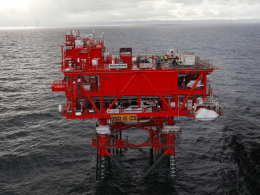
After their groundbreaking carbon injection in the offshore West Reservoir of the Nini depleted oil field, 1800 meters below the seabed, the project received an evaluation from leading classification society DNV.
Their review verified all safety aspects of the initiative, covering the operations from the fabrication by individual subcontractors to the offshore facility.
The consortium behind the project has now announced that they have completed and verified the pilot phase of the Greensand initiative.
Greensand’s lead partner INEOS has also applied for approval on behalf of license partners Nordsøfonden and Wintershall Dea, now Harbour Energy, for a first-of-its-kind large-scale carbon storage facility in Denmark, while working to start storing CO2 in the North Sea by the beginning of 2026.
Relevant: Project Greensand Reaches Big Milestone With First CO2 Injection
Mads Gade, Country Manager at INEOS Denmark and Commercial Director at INEOS Energy, commented that they now have documentation confirming that they have a well-functioning storage for carbon in the North Sea subsoil, where large amounts of CO2 that would otherwise have been emitted into the atmosphere can be safely and permanently stored.
He added, “We can see that the stored CO2 behaves as expected in the reservoir 1,800 meters below the seabed. That confidence gives us a solid foundation to take the next steps that will be crucial for CCS in Denmark.”
Looking ahead, the valuable knowledge gained from project Greensand will also be included in research exploring the possibility of storing carbon underground on land in Denmark.
Read more: New Study Unlocks The Carbon Capture And Storage Potential Of The North Sea Super Basin