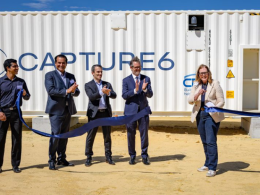




New Zealand company Verdus Energy has launched a new technology that converts various types of biomass into biochar and other high-value end products, helping dairy and livestock farmers transition to more sustainable practices.
Developed as a result of 15 years of trials, Verdus’ Biomass Conversion Technology (BCT) is a modular system that has the capacity to process 36 tonnes of dry biomass per day, generating negligible emissions and no residual waste.
Requiring ten shipping containers to be delivered on-site, this technology can be assembled in under a month and is compatible with locations such as farms, forests, and industrial facilities.
According to Verdus Energy, the biomass conversion technology can operate with a wide range of feedstock, including cattle manure, poultry litter, crop residues, and municipal solid waste, with the ability to transform it into more than 200 different marketable products.
The newly announced version of the biomass conversion system is actually the fifth generation of this technology, developed specifically to enable rapid deployment.
Besides enabling the production of carbon-sequestering biochar and carbon credits, this technology utilizes biomass to create other valuable products such as renewable diesel, sustainable aviation fuel (SAF), green fertilizers, organic pesticides and herbicides, bio-oils, and electricity.
As highlighted by Verdus Energy, the company’s solutions can deliver an overall greenhouse gas emissions reduction of up to 187%. In a statement, President and Chief Operating Officer Kevin Smith shared that this biomass conversion technology has already been proven commercially.
Relevant: BURN Wins Top MSCI Rating For Tanzania Biomass Carbon Project
He commented, “Version 4.0 has been operating for over two years, producing carbon fuel pellets for a major mining company. Rollout of V5.0 begins in Q4 2025, with production scheduled to start in North America in 2026.”
Reflecting on the company’s broader industry impact, Smith observed, “Verdus Energy is not just addressing waste—it is creating a new model for resource recovery, climate resilience, and economic regeneration.”
Read more: BioEnergy Development Creates A Biomass-Powered Microgrid For AI And Crypto