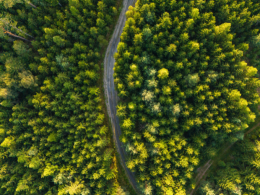
After years of observation in Denmark scientists from the University of Copenhagen have identified an interesting difference between two methods of forest restoration. Planted forests grow faster and accumulate more woody biomass, enabling them to capture and store carbon more rapidly.
In contrast, naturally regenerated forests develop more slowly but foster greater biodiversity and more complex ecological structures.
The study indicates that future afforestation projects should aim for a balance between rapid carbon sequestration and the restoration of diverse and resilient ecosystems.
Planting vs natural regeneration
The study compares naturally regenerated and actively planted forests on abandoned agricultural land.
The planted forests have more tree biomass and store more carbon. However, naturally regenerated forests possess different ecological characteristics. Therefore, forest restoration should not be considered solely based on the amount of stored CO2.
Man-made plantations stack significantly more biomass during the early stages of development. Over a period of 20 years they have accumulated 16 times more above ground woody biomass than naturally occurring forests. This accelerates carbon accumulation as well but it doesn’t mean they possess all the characteristics of a mature forest.
Relevant: WA Greens Push Back Against Federal Party Room On Forest Carbon Credits In Australia
Natural recovery proceeds more slowly through ecological succession but creates a greater diversity of plant species and structures.
Natural forests differ from artificial ones in their composition and ecological characteristics. This does not mean that artificial plantations lack value for biodiversity, but rather that they differ from naturally developed forests.
There is no single method of forest restoration that delivers all ecological benefits. Artificial plantations are suitable for rapid CO2 sequestration, whereas natural regeneration fosters greater diversity and supports biodiversity. Therefore, afforestation efforts must take various factors into account, rather than focusing solely on the number of trees planted.
Read more: CapMan And FSC I&P Partner To Improve Measurement Of Forest Biodiversity Outcomes