According to climate experts, the carbon dioxide removal (CDR) industry will play a vital role in the rush to reach net-zero goals by 2050, but we might need to look into CDR accounting first.
While curbing current emissions is still the primary focus if we want to avoid further damaging the atmosphere, CDR technology has the capacity to address the emissions from sectors that might be hard-to-abate in the short term, like agriculture and construction, along with legacy carbon emissions accumulated from decades of industrial activity.
As the growing CDR industry continues to innovate and develop pathways that show great decarbonization promise, the issue of monitoring, reporting and verification (MRV) of the actual effect of carbon removal projects still presents a challenge for further CDR scaling.

In a new paper published in the journal One Earth, Dr. Corinne Scown and Sarah Nordahl from the Lawrence Berkeley National Laboratory, along with colleagues from Lawrence Livermore National Laboratory and National Renewable Energy Laboratory, lay out a potential solution to this issue, outlining the foundations for a novel CDR accounting framework.
In their proposal, they provide a methodology that accounts for all the emissions within a range of carbon dioxide removal projects, an idea that aims to instill more certainty in both CDR suppliers and buyers by verifying that the carbon dioxide removal projects are making a real-life positive impact on the environment.
We sat down with Dr. Corinne Scown to hear more about the new carbon removal accounting framework, and here is what she shared with us.
What prompted you to develop this carbon dioxide removal accounting framework?
Dr. Corinne Scown:
We have a collaborative project with Lawrence Livermore National Laboratory, National Renewable Energy Laboratory and a bunch of partners who are industry players in the carbon dioxide removal space. The emphasis for the whole project was to develop some consensus based standard for how we do carbon accounting, like how much carbon removal does a project actually get you, and so this article was kind of the first step in laying out what those standards are.
Our whole goal is to tackle monitoring, reporting and verification (MRV) and the first step of that is how are you actually doing the calculation, what data do you need, and this was starting to answer that “how do you do the calculation” question.
How does this accounting framework differ from the conventional way of measuring CDR?
There are protocols that all use slightly different methods for doing this accounting, and that’s part of the issue.
People are using life cycle assessment to refer to what they are doing when they calculate how much carbon removal a given project achieves. But life cycle assessment (LCA), I mean it’s wonderful, and it’s something that I do frequently, and it is used to craft like low-carbon fuels regulations in particular, but it’s used in other contexts as well. Life cycle assessment best practices are certainly not enough for carbon accounting for CDR.
Relevant: The Logic Behind The Ledger: Charm Shares The Structure Of Their Reliable CDR Reporting
One of the distinctions we wanted to draw is for example if you adhere to LCA best practices based on the ISO standard here’s what you will get and then based on kind of the accounting rules we think folks are coalescing around for carbon dioxide removal here are the differences
We are drawing the distinction between what we consider kind of under the umbrella of MRV and carbon accounting versus what you would do if you were conducting a traditional life cycle assessment. And then you get different answers.
Life cycle assessment will give you negative numbers for projects that are not carbon removal. The framework that’s in our proposal will not do that.
How would the accounting be applied to a real-life project?
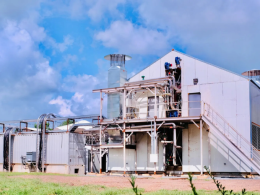
A really good example is a corn ethanol production facility.
There is an interest in selling carbon removal and what you do in that case is take the biogenic carbon dioxide that comes off of the fermenter when you are making ethanol, and it’s pure so it’s a lot easier to do carbon capture and sequestration with that than it is to do on like a post combustion stream that has CO2, it’s just cleaner, more concentrated, etc. If you take that and put it underground, the framework that is laid out in our article will tell you that as long as that whole production system is still like a net emitting system, like its emitting more greenhouse gas emissions than it’s putting underground then what you are really doing is you are just mitigating some of your emissions.
We don’t care if it’s biogenic or fossil, you are reducing the emissions from your project but your project does not achieve net carbon removal from the atmosphere. From the perspective of the atmosphere what is this project doing, is it removing carbon or is it adding it, and it that case that project is adding it.
Read more: Isometric Publishes New Whitepaper On MRV For Carbon Removal
In some of the accounting methods that people are using now for carbon dioxide removal, they look very narrowly at the CO2 and the fact that it is biogenic, that it came from biomass, and they’ll say well that’s carbon removal, because the plants took the CO2 out of the air, they fixed it into starches and so on, and with the ethanol we are going to take some of that carbon and put it underground. So technically, yes.
However, from that facility that often burns natural gas, I could go capture the exact same amount of CO2 from a post combustion stream and put it underground and nobody would call that carbon removal.
The atmosphere doesn’t care. Same amount, emissions are the same from the atmosphere’s perspective, but we kinda draw these narrow boundaries where people are claiming things are carbon removal and we’re saying you have to look a little broader than that.
Is the framework applicable for the whole CDR spectrum, or only for certain CDR technologies?
The paper is focused on a largely engineered system and I know that is sort of a vague term, but it really doesn’t tackle directly things like how we need to do the accounting for soil carbon accumulation, or aforestation and reforestation for example.
This kind of projects can definitely take parts of this framework and apply them, but in those cases there are so much more things that you have to consider in those systems because there is a lot more uncertainty, a lot more questions about durability and that was just beyond what we could tackle in a single paper.
All that is to say there is like more to come, this will not be one paper and then nobody has to do anything else, but it gets us headed in the right direction, hopefully.
What needs to be done for the framework to be adopted by the CDR community?
We have to get consensus among CDR suppliers, buyers, and the entities involved in MRV, we know it’s not enough for national labs to say this is how you do things.
We have to get everybody on board and make sure that we’ve got a framework that people believe both supports a growing industry that has to exist but also provides some reasonable guardrails so that we are not paying for carbon removal that is not achieving the long term goals of carbon removal.
The point is to do as much mitigation as we possibly can and then to make up for that remaining slice of emissions that we can’t mitigate and legacy warming with true CO2 removal from the atmosphere. So, I think we’re headed in that direction.
This project has a lot of really wonderful partners and we’ve had follow-up conversations and we’re sort of planning next steps in terms of developing this framework, so I’m hopeful there will be enough inertia that will drive the uptake of this general framework.
If implemented, how would the framework affect CDR suppliers and buyers, for example will it be more time-demanding?
In terms of timing considerations we haven’t explicitly weighed in on that.
My hope is that in some ways the framework laid out in this paper suggests that something being sold as carbon removal today maybe shouldn’t be claimed as carbon removal. There is no way around that, that’s what it says. But if we can get enough people moving in the same direction it will at least provide some certainty as to which projects are going to be able to achieve removal and how much.
This effort of getting everybody on the same page incentivizes the right kind of projects that actually achieve the goals of CDR and it also offers some more certainty that helps the companies, it helps the investors, it helps the buyers to feel like they know what they are getting.
How do you see the future of the CDR industry, what would you say are the major obstacles to scaling besides reliable accounting?
It’s such a fun space to work in and there is so much promise, energy and enthusiasm. People feel good about what they’re doing, they see a clear role for it in the overall climate change mitigation efforts. So I’m very hopeful.
There are challenges both in building up the market and creating a kind of certainty and confidence in it and then maintaining that so that we don’t sort of stumble on the same issues like carbon offsets have, we really want to build and maintain confidence.
But there are also technical challenges. Direct air capture (DAC) technology has to get scaled and we have to bring the costs down. BiCRS or BECCS, those systems are challenging to build and they also have lots of scale issues. The bigger you get, the more feedstock you have to source, you might have to source from further away or source heterogeneous feedstock, all of those things pose technical challenges that I think are surmountable, but we still have to work through them, both in the R&D space, including institutions like the national labs but also the suppliers, these companies that are trying to go out and actually do it, really it’s a lot of work but they’re doing the right thing in trying to go ahead and build these systems.
Sometimes you just have to learn through some trial and error in addition to doing the R&D.
Will you expand on this work in the future or focus on other climate-relevant projects?
There is going to be a US Department of Energy sponsored report coming out soon that involves even more national labs on the technological challenges of CDR, so stay tuned for that, we are wrapping it up and should be out soon. It will address some of the issues that we talked about today, so I’m excited about that.
This MRV project is not over yet, and we are planning the next output collaboratively with our industry partners, so I’m also super excited for that, because then it’s not just the scientists in the national labs putting a paper together, we get to come out with something that’s got sort of even broader reach and that will be exciting too.
And then we are going to make resources publicly available to get what we are working on out into the world and freely accessible to anyone who wants to use it, we don’t want this stuff to be behind the paywall, this should benefit everybody.