British globally positioned retail company Marks & Spencer (M&S) has partnered with Black Bull Biochar to tackle emissions from the poultry supply chain for its business operations.
Under the agreement, M&S will purchase biochar carbon removal credits from Black Bull Biochar in an effort to implement sustainable practices within its established poultry supply chain.
The company shared that it embarks on this collaboration in an attempt to reduce the ammonia emissions from poultry farms while also improving the well-being of the birds on the farms.
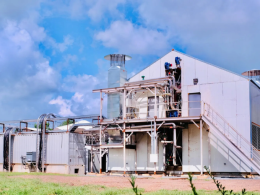
On its end, Black Bull Biochar offers a biochar production process that integrates seamlessly with existing systems for farm management, empowering farmers across the UK to lower the emissions from their farms while boosting crop yields.
In a joint initiative that also includes Avara Foods—one of the UK’s largest poultry producers—Black Bull Biochar will disperse its biochar product on farms, where the decarbonization material will collect CO2 emissions while enhancing the environment and local ecosystems.
According to Avara Foods Innovation Manager Sam Laing, this collaboration serves to prove that carbon dioxide removal can be practically applied within food production and retail supply chains.
As outlined in the announcement, the shared biochar initiative is set to run in the period between summer 2025 and spring 2026.
During this time, the project is expected to improve the poultry living conditions and enhance the nutrient retention on the soil where the biochar product is dispersed.
Relevant: Opinion: Simple Solutions Will Catalyse Action For Supply Chain Emissions
The initiative is backed by the Marks & Spencer Plan A Accelerator fund, established to help the retail company reduce its impact on the planet and help it advance towards its net-zero goals.
By partnering on this initiative, the companies hope to be able to lay the foundation for future optimizations of this kind by introducing a scalable model suitable for other large-scale retailers that could adopt it as part of their sustainability strategies and transitions to net-zero.
Read more: Microsoft Appoints Dedicated Team To Combat Its Supply Chain Emissions