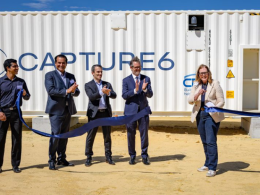
In a recently released market snapshot, the Canada Energy Regulator (CER) reflects on the tremendous growth of carbon dioxide removal (CDR) technologies in the country, pointing to the drivers of this progress and the challenges that need to be addressed.
As noted in the publication, Canada is currently home to 78 carbon removal companies and 48 active and planned CDR projects, as indicated on Carbon Removal Canada’s Carbon Console. Several of these companies have already managed to secure investments from leading brands, including Microsoft, Shopify, and Amazon.
This momentum, the analysis observes, has been made possible by a number of favorable factors that have catalyzed CDR development in Canada in recent years.
One of these factors is the country’s climate policies, like industrial carbon pricing and emissions reductions, that enable the creation of a CDR market in which suppliers can sell carbon credits, particularly to industries that have limited alternative decarbonization routes.
The country also provides innovation funding opportunities and investment tax credits, stimulating CDR R&D and providing a stepping stone towards tech commercialization.
Another major advantage available in Canada is the abundance of natural resources that provide a fertile environment for the proliferation of a number of CDR pathways.
Its low-CO2 electricity sources like hydro, wind, solar, and nuclear present a sustainable and lower-cost option for conventionally energy-demanding Direct Air Capture (DAC) technologies; its vast forests and agricultural sectors provide ample biomass feedstock for BECCS and BiCRS, while its coastline and marine research centers serve as learning sites for marine CDR approaches like direct ocean capture (DOC) and ocean alkalinity enhancement (OAE).
Canada’s developed mining sector can support enhanced rock weathering (ERW) and CO2 mineralization projects, while its largely available geological reservoirs can serve as carbon storage sites.

Relevant: New Policy Primer By Carbon Business Council Offers Pointers On Advancing CDR In Canada
With all these assets at hand, the CDR sector in Canada still faces significant challenges on the journey towards commercialization.
These include high cost and energy consumption across CDR pathways, the need for further research and safety reassurance around marine carbon removal, land-use conflict resolutions around BECCS and BiCRS, and mining activity management for ERW and CO2 mineralization.
Additionally, the Canada Energy Regulator highlights that many CDR technologies need sustained policy support to remain viable, and the country is yet to develop a robust CO2 transport and storage infrastructure.
Looking ahead, the CER publication points to the priorities outlined in the 2023 Canada Carbon Management Strategy as a guide on what the future steps should look like.
Read more: New Carbon Console Tool Showcases The CDR Sector In Canada