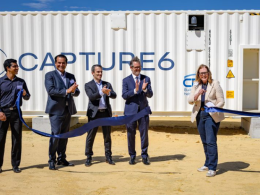


Reports have emerged that carbon removal company Graphyte is nearing a closure on a final investment decision that would enable the company to triple its capacity.
Positioned in Arkansas, Graphyte specializes in carbon dioxide removal (CDR) through a method called carbon casting.
This innovative process involves converting plant biomass into solid bricks that can be stored underground, where the CO2 emissions that would otherwise be emitted from the biomass decomposition remain locked away from the atmosphere for long periods of time.

To secure the biomass feedstock, Graphyte collaborates with paper and timber mills, as well as farms and other facilities that generate waste from plants.
Currently, the company operates one facility in Arkansas that has the capacity to process up to 14,000 tons per year. Since its launch back in 2024, this plant is reported to have successfully sequestered approximately 5,000 tons of CO2.
In an announcement, originally shared by Semafor, Graphyte CEO Barclay Rogers stated that in the upcoming two to three weeks, the company will “almost certainly” embark on an expansion that would up its processing capacity to 45,000 tons.
This news comes a year after the company locked in $30 million in a Series A funding round jointly led by Prelude Ventures and Carbon Direct Capital, with participation from Bill Gates’ Breakthrough Energy Ventures and Overture.
Relevant: Graphyte Secures $30M Funding For Innovative Carbon Removal Tech
Set on a mission of delivering carbon removal services at a cost of around $100 per ton, Graphyte is confident that with its CDR solution standing at this price point, the company will be able to cater to leading CO2 removal buyers like Microsoft and JP Morgan.
With the potential final investment decision closure on the way, Graphyte is looking to establish new processing sites in British Columbia and Arizona, where it would sequester CO2 by utilizing biomass feedstock from trees cut down in the process of wildfire management.