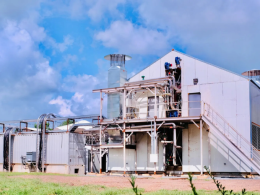
Tech giant Google has signed a landmark deal with Holocene, one of the promising Direct Air Capture (DAC) startups working on pulling carbon dioxide from the atmosphere. The $10 million offtake agreement will aim to capture and permanently store 100,000 tons of carbon dioxide.
In a blog post, Google state that the main reason they picked Holocene was because of the startup’s unique approach to DAC – a combination of solid-based and liquid systems that have a high cost reduction potential.
The deal will also allow Holocene to receive funds now, rather than in 2030, the (earliest) target date for carbon removal credit delivery from the first operational facilities. The project is also expected to qualify for 45Q credits that will be added to the payments from Google, providing a total of $180 per ton.
https://www.youtube.com/watch?v=OcWDrbC-2CAdBy the early 2030s, Holocene aims to capture and store 100,000 tons of carbon dioxide. This ambitious goal aligns with Google’s broader commitment to environmental sustainability.
In addition to this partnership, Google has invested in other carbon capture projects and is actively involved in initiatives to promote carbon removal technologies.
Relevant: Holocene Unveils Its First Direct Air Capture Pilot At Demonstration Event
Holocene’s approach to direct air capture
Holocene’s technology utilizes a waterfall system with a special amino acid to capture carbon dioxide, which is then converted into a solid crystal mass.
This process allows for the extraction of pure carbon dioxide, which can be stored underground.

This method allows Holocene to overcome the significant energy and financial hurdles associated with direct air capture.
By utilizing low-temperature heat from renewable or waste sources and employing common industrial equipment, Holocene is positioned to expand its operations efficiently and cost-effectively.
Google increasing focus on carbon removal
Google is undergoing a significant transformation in its pursuit of climate neutrality. Earlier this year, the company announced it will cease all purchases of carbon credits. Instead, they have established a more stringent goal of reaching net-zero emissions by the year 2030.
To accomplish this, Google will implement a dual strategy: substantially reducing its own emissions and actively supporting projects that remove carbon dioxide from the atmosphere.
The tech giant, together with other major corporations like Meta, Stripe, Shopify and others, is also part of Frontier Climate – an advance market commitment to buy close to $1 billion of permanent carbon removal between by 2030. Google has made several CDR purchases via Frontier.
In a similar initiative, this year, the company announced the launch of the world’s largest advance market commitment (AMC) called the Symbiosis Coalition – an innovative AMC co-founded by Meta, Salesforce and Microsoft.
The Symbiosis Coalition is pushing the boundaries of climate action by actively searching for and promoting innovative nature restoration projects that meet the highest standards of quality. This initiative sends a clear message to the market that high-quality carbon removal projects with significant environmental benefits are in demand, and buyers are prepared to invest in them at a premium.