


Buyers from the Frontier advance market commitment, including Google and Stripe, have inked a carbon dioxide removal (CDR) deal with Canadian company NULIFE GreenTech, agreeing to invest $44.2 million for the removal of 122,000 tons of CO2 between 2026 and 2030.
This agreement builds on a previous partnership between NULIFE and Frontier, kicked off in 2024, when the latter became NULIFE’s first buying customer. Since then, the Saskatchewan- based company has successfully delivered more than half of the total volume contracted.
For Frontier, this deal marks the third offtake agreement with a Canadian company, bringing its total investment made in climate solutions in this country to over $100 million.
NULIFE specializes in a CDR process that converts biowaste into a concentrated bio-oil product, enabling CO2 to be transported and stored geologically in salt caverns.
Biowaste is a source of CO2 if handled in conventional ways that let it decompose in open air, where it releases greenhouse gases like carbon dioxide and sometimes even methane.
Many agricultural workers find it tricky and expensive to manage this kind of waste, that can include, for example, grease‑trap waste from food processors, sludge from canola crushing, biosolids from wastewater treatment, and other similar residues.
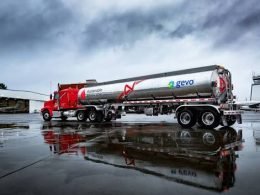
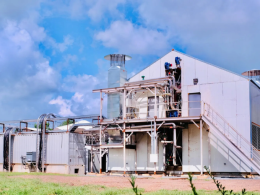
NULIFE’s CDR approach processes these biowaste materials with hydrothermal liquefaction (HTL) technology, that uses the residues as feedstock to create CO2-dense bio-oil and biochar, that are transported via trucks to the salt caverns storage sites, where they get injected for long-term underground storage at a depth of 1,000 meters.
Relevant: Frontier Buyers Sign $41M Offtake Agreement With Reverion
By injecting both bio-oil and biochar into underground storage together, NULIFE successfully increases the CO2 removal efficiency.
To date, the company’s Saskatoon site has logged thousands of operating hours on commercial HTL processors and has delivered tons of credits independently verified by Isometric.
This innovative CDR approach is said to be compatible with a wide range of biowaste types, such as dry biomass, woody biomass, crop residues, and wet waste materials.
Considering this flexibility, the Frontier coalition estimates that HTL technology has the potential to reach 1.5 gigatons of annual CDR by 2040.
Read more: Scientists Find Way To Turn Plastic Waste Into Carbon Capture Materials