The United States’ Midwest is set to have an outsized role in shaping the emerging carbon capture and storage industry, particularly in the wake of ongoing government funding cuts and an overall environment of political uncertainty.
The American Midwest has long been known as the nation’s breadbasket, a region dominated by agriculture, ethanol production, and heavy industry.
But today, a new identity is emerging – one that could reshape the region’s economic and environmental future.
As the urgency to reduce carbon emissions intensifies, the Midwest is becoming a critical hub for carbon capture and storage (CCS), with ethanol plants, fertilizer facilities, and manufacturing operations stepping up as unlikely climate allies.
From cornfields to carbon pipelines, we are seeing how the industrial heartland is leveraging its infrastructure, geology, and grit to carve out a central role in the fight against climate change.
“While the recent withdrawal of US Department of Energy funding presents real challenges to long-term project development across heavy industry and power, the Midwest’s unique combination of concentrated emissions, existing infrastructure, and geologic suitability makes it a critical region for advancing carbon capture and storage at scale,” says Ryan Kammer, Carbon Management Research Manager at the Great Plains Institute.
Regional advantages
The Midwest has two prime aspects that have the potential of positioning it as a leader in the CCS industry: ethanol production and opportunities for geological storage.
The region produces over 70% of US ethanol, with facilities concentrated in Iowa, Illinois, Minnesota, Nebraska, and South Dakota. Unlike flue gas from power plants or factories, ethanol fermentation emits nearly pure CO2, making it significantly easier and cheaper to capture.
This high concentration reduces the need for expensive capture technology, giving ethanol producers a relatively low-cost entry point into the CCS space.
Furthermore, beneath the farmland and prairie lie deep saline aquifers and porous rock formations capable of storing vast amounts of CO2 securely and permanently.
States like Illinois sit atop the Illinois Basin, one of the most studied and storage-ready formations in the country. North Dakota, meanwhile, offers the Williston Basin – well-suited for Class VI injection wells. These geologies provide the physical backbone for long-term sequestration.
Existing infrastructure & CO2 pipelines
The Midwest is already home to dense transportation networks—both road and rail—that support its agricultural exports. These logistical pathways are now being repurposed and paralleled by planned CO2 pipelines.
Furthermore, many ethanol and fertilizer plants are co-located with utilities or industrial facilities, providing anchor points for carbon hub development and shared infrastructure models.
However, CO2 pipeline projects have faced significant—in some cases even impossible—hurdles and setbacks.
Summit Carbon Solutions is now the last of three major CO2 pipeline developers willing to tackle the challenge of connecting Midwest ethanol plants to underground storage.
Its ambitious project—the Midwest Carbon Express—would span roughly 2,000–2,500 miles across five states and carry CO2 from over 50 ethanol facilities to sequestration sites in North Dakota. However, Summit’s effort has turned into a regulatory battleground with numerous lawsuits, landowner pushback and denied permit applications.
The proposed pipeline project was met with strong opposition, as landowners in South Dakota sued the company over unwanted surveying and instrumentalized local sentiment to pass moratoriums and block eminent domain—a momentum that led to the state banning eminent domain for CO2 pipelines in March 2025
Regulators in North and South Dakota have rejected Summit’s siting permits, citing insufficient responses to geological, cultural, and landowner concerns. In Iowa, the state Senate recently approved stricter pipeline regulations—capping permits to 25 years and raising insurance requirements—raising the bar for Summit’s viability.

Despite these challenges, Summit is determined to see the project through and has pledged to reapply for permits where needed and explore all legal avenues to challenge regulatory and legislative roadblocks.
The company has already secured voluntary easements for about 75–90% of the route in most states, with North Dakota and Minnesota even higher.
Rory Jacobson, Head of Policy at Carbon Direct, echoes the notion of the Midwest being primed for CCS deployment, but recognizes the CO2 transport as still being a major hurdle.
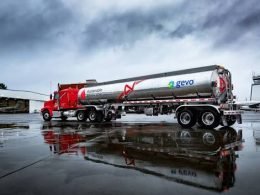
“Restrictive state legislation around eminent domain makes it incredibly challenging to build the pipeline networks these projects need. Without CO2 pipelines, the economics of CCS in the Midwest become far more difficult, as transporting by truck or rail is costly, less efficient, and not what investors or developers planned for,” Jacobson told the Carbon Herald.
Political landscape
In a seismic shift on May 30, 2025, the US Department of Energy (DOE) canceled ~$3.7 billion in previously announced carbon capture and clean energy demonstration funding, including multiple CCS awards. DOE Secretary Chris Wright defended the decision, citing concerns over economic viability and prioritization of taxpayer dollars.
Critics—including the Carbon Capture Coalition, Sierra Club, and American Council for an Energy‑Efficient Economy—warn that the pause is a “major step backward” that undermines US climate leadership and regional investments.
Great Plains’ Ryan Kammer emphasizes that “Continued federal investment and policy certainty will be essential to build on this momentum and realize the region’s full potential.”
Despite this setback, however, some industry players are confident they will be able to move their projects forward nevertheless. Biofuels manufacturer Conestoga Energy, which was among the companies hit by the DOE’s funding cut, is betting on the region’s agriculture sector playing a special role in ‘broader decarbonization efforts’.

CEO Tom Willis told the Carbon Herald that CCS “bridges the gap between traditional farming and the clean energy economy by enhancing profitability and unlocking new revenue streams while reducing emissions, and this has been enabled, on a bipartisan basis, by federal incentives like the 45Q tax credit as well as state-level low carbon fuel standards (LCFS).”
“By integrating CCS as a core element of ethanol production, Conestoga has created a scalable, replicable model that is reflective of our identity as an agriculture-based company.”
However, while the 45Q tax credit is undeniably a fundamental support for the budding CCS industry, its standing is not written in stone.
In June 2025, over 100 local officials from the Midwest and West urged Congress to scrap the 45Q tax credit for carbon capture and oppose federal efforts to override local control of CO2 pipeline projects.
Citing safety risks, fraud concerns, and federal overreach, they demand a shift toward local authority and fiscal responsibility. Meanwhile, Congress appears poised to retain but narrow 45Q eligibility in upcoming legislation.
A further regulatory hurdle facing CCS deployment in the Midwest is the permitting of Class VI wells, which are specifically designed for long-term CO2 sequestration under EPA’s Underground Injection Control (UIC) program. Without state primacy over this process, developers must apply directly through the federal EPA, often facing delays of two years or more.
To speed up projects, several Midwestern states have sought and, in some cases, secured primacy, giving them the authority to permit and regulate Class VI wells themselves. North Dakota was the first to receive primacy in 2018, followed by Wyoming. Illinois, Nebraska, and others are actively pursuing it.
A strategic junction
Regardless of the immediate developments, the Midwest will have a crucial role to play. It has the raw materials—CO2 sources, geological storage, and industrial infrastructure—to lead America’s CCS transformation.
But the cancellation of $3.7 billion in DOE funding for CCS and clean energy demonstration projects has rattled investor confidence and thrown many regional efforts into uncertainty. For developers and industrial partners, the message from Washington was ambiguous at best — support may be fleeting, and CCS must now prove itself not only as a climate solution but also as a cost-effective business model.
Meanwhile, the fierce opposition to Summit’s project underscores that CCS infrastructure is not just a technical or economic issue—it’s a social and political one. Building trust will be just as important as building pipelines.
Still, CCS is one of the few scalable solutions available today to decarbonize hard-to-abate sectors like cement, steel, and agriculture. For the Midwest, it also represents a rare opportunity to lead in the energy transition—not by abandoning its industrial legacy, but by transforming it.
The corn-to-carbon promise remains compelling, but only if policy and partnership align to unlock it.