The European Union’s emerging plan to use international carbon credits to help meet its 2040 climate target could unlock funding to expand clean cooking technologies across developing countries, France’s top climate envoy said at a recent summit, as reported by Climate Home News.
Under the amended climate law agreed in early February, the bloc will be able to count “high-quality” international credits toward up to 5% of the emissions reductions needed to hit its goal of cutting greenhouse gases (GHG) by 90% by 2040.
The measure, which applies from 2036, requires credits to follow “robust safeguards” and “ensure environmental integrity,” though the European Commission has yet to clarify which credits would qualify or how they would be sourced.

Relevant: Europe’s Carbon Market Faces Political Strain As Reform Debate Intensifies
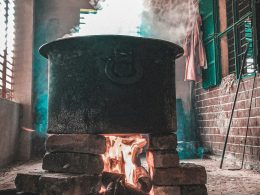
At a clean cooking summit hosted by the International Energy Agency (IEA), French climate ambassador Benoît Faraco described the EU as potentially becoming a “big investor” in carbon credits that could scale up efforts to replace polluting wood and biomass stoves with cleaner alternatives like liquefied petroleum gas (LPG).
Faraco said he had discussed this possibility with French energy giant TotalEnergies, which is working to expand LPG cookstove use in Africa.
Clean cooking projects have long been controversial among climate experts, with critics arguing that credits tied to cookstoves can exaggerate climate benefits and rest on weak monitoring frameworks.
An expert at Brussels-based NGO Carbon Market Watch (CMW) warned that trading credits “that have repeatedly failed to deliver on their promises” carries significant risks.
TotalEnergies has invested heavily in LPG infrastructure intended to extend cleaner cooking to millions in Africa and India.
Last year, the company said it would acquire credits from a Rwandan cookstove initiative that it expects will prevent more than 2.5 million tons of carbon dioxide equivalent (CO2e) over the next decade.
Read more: Opinion: What The Koko Collapse Means For Carbon Finance And Clean Cooking