Finland and Norway have announced plans to collaborate on the cross-border transportation and storage of carbon dioxide (CO2).
This partnership aligns with both countries’ commitment to mitigating climate change and promoting sustainable energy practices.
Finnish Minister of Climate and the Environment Kai Mykkänen and Norwegian Minister of Energy Terje Aasland met virtually to discuss the potential for energy sector cooperation.
They agreed that joint efforts in CO2 transportation and storage would be a valuable step forward. Finland, while eager to implement carbon capture and storage (CCS) technologies, faces limitations due to its soil composition.
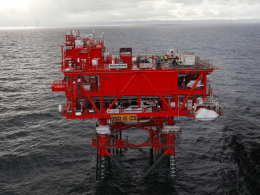
Norway, on the other hand, has extensive experience in safely storing CO2 beneath the seabed.
By working together, the two nations aim to create a framework that enables Finnish companies to transport their CO2 emissions to Norway for permanent storage.
Minister Mykkänen emphasized the importance of this cooperation for Finnish companies: “Finland has a lot of potential in the capture and use of biogenic carbon. In addition, we want to make it possible to store carbon dioxide permanently.”
“The cooperation to be launched with Norway will improve the conditions for the clean growth of companies and for the development of technological solutions,” Mykkänen says.
Relevant: Norway And Switzerland Shake Hands On CCS, CDR Collaboration
Minister Aasland also expressed his enthusiasm for strengthening the bilateral relationship: “I look forward to strengthening our cooperation with Finland and to facilitate cross-border transport and storage of CO2 between our two countries.”
“We have capacity to store large amounts of CO2 on the Norwegian Continental Shelf which can provide a service and market opportunity for emissions in Europe. This kind of teamwork is important for carbon capture and storage to become the successful climate mitigation measure we need it to be,” says Aasland.
The initial step involves the signing of a Memorandum of Understanding (MoU) between Finland and Norway.
Relevant: Germany To Invest $3.7 Billion In Industry Transition And Carbon Storage
This agreement will outline the framework for cross-border CO2 transportation and storage. However, before the MoU can be finalized, Finland must complete certain procedures under international agreements, including the preparation and parliamentary approval of a government proposal.
Beyond CO2 storage, Finland and Norway also discussed other energy-related topics, such as the Nordic electricity markets, grid development, energy security, critical infrastructure protection, and Finland’s experiences with nuclear energy.