Project CAPTURED has achieved two regulatory milestones from the IMO and EU ETS supporting the commercial rollout of onboard carbon capture and storage (OCCS), marking a major step forward for maritime decarbonization.
The achievements follow the completion of the world’s first end-to-end maritime carbon capture value chain demonstration in June 2025.
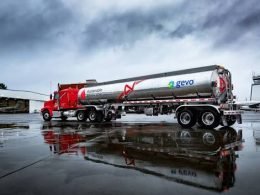
During the trial, CO2 captured on board a vessel was transferred ship-to-ship, transported onshore, and permanently stored through carbon mineralization – a process that converts captured carbon into stable, reusable materials for industrial applications.
In a significant regulatory win, the CO2 captured during the demonstration has been officially recognized under the EU Emissions Trading System (EU ETS).
This approval allows ship operators to deduct verified captured CO2 from their total emissions subject to EU Allowances (EUAs), provided the CO2 is permanently bound through chemical processes like mineralization.
Expanding Storage Pathways At The IMO
Data gathered during Project CAPTURED also formed the foundation of a proposal submitted to the 84th session of the International Maritime Organization’s (IMO) Marine Environment Protection Committee (MEPC 84).
The IMO granted in-principle support for carbon mineralization, formally recognizing it as a permanent CO2 storage solution alongside traditional geological storage methods.
Relevant: EU’s Proposed Carbon Levy On Some Long-Haul Flights Draws Swift U.S. Reaction
By expanding approved downstream pathways for captured carbon, the decision provides shipping companies with a clearer commercial route to lower net emissions while complying with evolving global standards.
Commenting on the milestone, Professor Lynn Loo, Chief Executive Officer at the Global Centre for Maritime Decarbonisation (GCMD), highlighted the broader implications for the sector.
“These developments transform the pilot project into a validated example of maritime carbon circularity, combining regulatory recognition, commercial value and emissions reduction impact,” Loo said.
Read more: DNV Launches First Standardized Framework For Onboard Carbon Capture