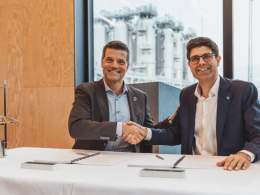
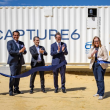




Encyclis has secured planning permission to build a full scale carbon capture plant at its Rookery South Energy Recovery Facility in Bedfordshire, marking another step in the company’s push to decarbonise the UK waste sector. Central Bedfordshire Council approved construction of the capture unit and related infrastructure on land next to the existing site, clearing a key regulatory hurdle for the project.
The decision follows Encyclis’ October agreement with the Department for Energy Security and Net Zero to reach financial close on the UK’s first full scale carbon capture installation at an energy from waste plant, located at Protos in Cheshire. Together, the projects position Rookery South as the second carbon capture enabled facility within Encyclis’ Midlands cluster, a region the company views as central to scaling the technology.
Rookery South has already played a role in early deployment. The site hosts one of the UK’s first carbon capture pilot plants in the waste sector and recently processed its two millionth tonne of residual waste since opening in January 2022. According to the company, the full scale system would capture carbon dioxide from flue gases produced during waste combustion, with work ongoing to finalise transport and long term storage solutions.
“The confirmation of planning permission for Rookery South is another milestone achievement in our industry-leading mission to enable the decarbonisation of residual waste treatment,” said Mark Burrows-Smith, chief executive of Encyclis. He added that, alongside Protos, the company now has sufficient planning consents to capture volumes of CO2 equivalent to fossil emissions across its Midlands operations.
The Bedfordshire facility can treat up to 657,000 tonnes of waste annually, generating around 60 megawatt hours of baseload electricity for the National Grid while recovering ash and metals for reuse. Encyclis says carbon capture could also unlock carbon removal potential due to the biogenic content of waste, effectively drawing CO2 out of the atmosphere.
The move reflects a broader shift in the UK, where government backed carbon capture is increasingly seen as essential for hard to abate sectors and several FID’s for large projects were announced earlier this year. As planning approvals turn into concrete projects, energy from waste is emerging as a test case for how quickly the UK can translate climate policy into industrial infrastructure.