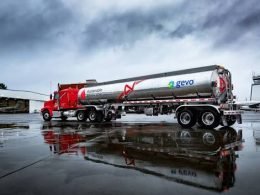
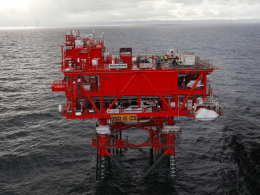
The US Department of Energy’s (DOE) Office of Fossil Energy and Carbon Management (FECM) has awarded $6 million to a project investigating the transport of CO2 from onshore industrial and power generation sources to offshore geological storage sites in Texas.
Simultaneously, DOE announced the reopening of a funding opportunity under the Bipartisan Infrastructure Law, offering up to $48 million for regional CO2 transport networks. These networks aim to facilitate the movement of CO2 to secure storage locations or for utilization in value-added products.
This initiative supports the development of a robust carbon management industry, crucial for reducing emissions, creating jobs, and enhancing energy security.
“As we continue to build out the infrastructure needed to safely transport and permanently store carbon dioxide emissions across the Nation, we are exploring a range of carbon dioxide transport options based on regional requirements,” stated Brad Crabtree, FECM Assistant Secretary.
“By investing in engineering and design studies that advance this critical planning, we are helping to ensure a safe, reliable CO2 transport system to support a clean and secure energy and industrial economy.”
Achieving a net-zero emissions economy by mid-century necessitates the capture and permanent storage of an estimated 400-1,800 million metric tons of CO2 annually.
Relevant: Enterprise To Build New CO2 Transportation Network In Texas For 1PointFive
To accommodate the anticipated rapid growth of the carbon capture and storage sector, a significant expansion of the CO2 transport network is essential within the next decade. This expansion will connect CO2 sources, such as industrial facilities and power plants, to geological formations suitable for secure, long-term underground storage or to locations where CO2 can be utilized as a feedstock for various products, including fuels, chemicals, and building materials.
The selected project will undertake a front-end engineering and design (FEED) study to assess the feasibility of a modular, open-hub transportation network.
This network will connect multiple CO2 sources located around the Port of Corpus Christi with nearby large-capacity offshore permanent storage sites.
The project builds upon a preceding pre-FEED study and detailed site characterization activities conducted within the proposed offshore storage sites of the Mustang Island and Port Aransas North tracts in Texas state waters.
Read more: CapturePoint Selected To Transport And Store Project Cypress CO2 For Climeworks