Denmark is preparing to flip a major symbol of its fossil fuel past into a cornerstone of Europe’s CO2 management future.
INEOS’ Greensand Future project, built atop the retired Nini oil field in the Danish North Sea, is emerging as one of the EU’s most ambitious carbon capture and storage (CCS) facilities, marking a significant step in the bloc’s push toward large-scale CO2 sequestration.
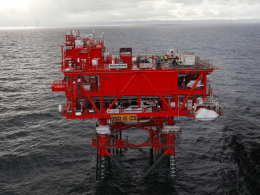
The project centers on the former Siri oil platform, now being refurbished to receive and store liquefied CO2 in depleted reservoirs roughly 1,800 meters below the seafloor.
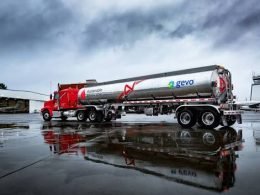
To support the effort, INEOS is constructing a temporary onshore CO2 storage hub at the Port of Esbjerg and commissioning a dedicated carrier vessel in the Netherlands to shuttle captured CO2 offshore.
INEOS expects initial operations to begin with 400,000 tons of CO2 stored per year, scaling to as much as 8 million tons annually by 2030.
According to Mads Gade, CEO of INEOS Energy Europe, Denmark’s subsurface could ultimately store “several hundred years” of Europe’s emissions, potentially positioning the country as one of the continent’s central CO2 storage providers. The Greensand site’s geology appears to support that ambition. Experts cited by the company highlight that the region’s sandstone formations offer strong containment characteristics for long-term CO2 sequestration.
Relevant: BASF And ANDRITZ To Capture 435,000 Tons Of CO2 From Danish Waste Plant
The project aligns with the EU’s rapidly accelerating CCS agenda: Brussels aims to build at least 250 million tons of annual CO2 storage capacity by 2040. The Greensand development signals both the scale and urgency of infrastructure required to meet that target.
Still, the expansion of CCS continues to draw criticism from environmental groups. Greenpeace Denmark argues the technology should be reserved for sectors where emissions are “truly difficult or impossible to abate,” cautioning against its use as a substitute for deep emissions cuts.
As Europe races to secure reliable storage capacity, Denmark’s North Sea pivot may offer a glimpse into how former fossil assets can be retooled for a carbon-constrained future.
Read more: TotalEnergies Sells CarbonVault 35% Stake In Danish North Sea CCS Project