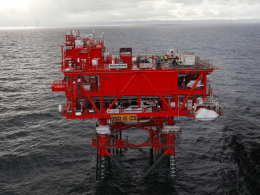
China National Offshore Oil Corporation (CNOOC) has begun construction on an offshore CO2 capture, utilization and storage (CCUS) project at the Dongfang 1-1 gas field in Hainan Province, marking the country’s first demonstration of carbon injection technology in an offshore setting.
The project is designed to capture carbon dioxide generated during natural gas production, process it, and reinject it into subsurface reservoirs.
Once operational, it is expected to store more than one million metric tons of CO2 annually, positioning it as a large-scale deployment within China’s expanding CCUS portfolio.

Integrating Carbon Storage with Gas Production
The initiative applies carbon injection techniques commonly associated with enhanced hydrocarbon recovery. In this case, captured CO2 is compressed and injected back into gas-bearing formations, where it helps mobilize otherwise difficult-to-extract natural gas resources.
By moving the carbon management process offshore, the project aims to reduce emissions directly at the production site rather than relying solely on onshore treatment. This approach is expected to improve both operational efficiency and environmental performance.
Relevant: China’s CNPC Hits One Million-Ton Carbon Injection Milestone In Oilfield Push
The development will be integrated into existing infrastructure at the Dongfang 1-1 field, including subsea pipelines in the Yinggehai Sea.
In addition to enabling CO2 storage, the project is intended to support continued gas production and improve the economics of developing higher-carbon reservoirs in the region.
As offshore energy producers look for ways to lower emissions, projects like this highlight the potential for combining carbon storage with resource extraction. The Hainan initiative represents an early example of how CCUS can be embedded directly into offshore operations at scale.
Read more: Japan Approves Offshore Carbon Storage Exploration Near Chiba