


As 2025 nears its end, we take a retrospective look at the past 12 months, reflecting on the key developments that moved the needle for the carbon dioxide removal (CDR) industry from brave early-stage projects into even more confident larger-scale deployments.
At the end of 2024, the durable carbon removal market stood at nearly 8 million tonnes in purchase deals, easing into 2025 with slow progress that picked up pace by February and continued growing throughout the year.
Recently released CDR.fyi data showed that the durable CDR market has now officially crossed the 1 million mark in deliveries, confirming the strong focus on results on the supplier side, while Puro.earth officially certified the 100th facility on the Puro Registry.
In parallel with this major progress, the industry continues to face the lack of new buyers, supportive financing mechanisms, and stronger policy support to scale efforts further.
This year, the general sector mood improved when the SBTI announced the inclusion of CDR in its draft version of the Corporate Net-Zero Standard v.2, allowing corporate buyers to also pursue CDR as part of their credible, science-backed sustainability strategies.
When it comes to buyers, the sector advancement this year was mainly driven by the seasoned frontrunners in CDR purchases, including, among others, Microsoft, Google, JPMorgan Chase, Airbus, and Equinor.
Buyers invested in mixed portfolios of engineered and nature-based CDR, supporting initiatives that deliver CO2 removal results along with additional social and environmental benefits.
The top 5 2025 CDR deals were the ones Microsoft locked in with Rubicon Carbon (18M tCO2 via ARR), Chestnut Carbon (7M tCO2 via ARR), AtmosClear/Fidelis (6.75M tCO2 via BECCS), Stockholm Exergi (5.08M tCO2 via BECCS), and Vaulted Deep (up to 4.9M tCO2 via waste management).

The durable CDR market was dominated by biochar carbon credits, with CDR.fyi data showing that 1.6 million tonnes of biochar CDR were sold in the first half of 2025 alone.
Biochar’s momentum was powered by one of the landmark deals of the year, in which Microsoft purchased the staggering amount of 1.24 million tonnes of biochar carbon removal to be delivered by Exomad Green over a period of 10 years.
Exomad Green emerged as the top biochar supplier on the market, launching construction of what is projected to be the largest biochar production facility in the world, currently under way in Bolivia’s Guarayos Region.
Relevant: Exomad Green Starts Work On The World’s Largest Biochar Facility
2025 also brought progress for other CDR pathways, including direct air capture (DAC), enhanced rock weathering (ERW), and mCDR.
In Alberta, Canada, Deep Sky officially launched its innovative Alpha testing and innovation center that will deploy up to 10 DAC technologies from different developers under the same operating conditions, refining them to unlock cost reductions and improved efficiency.

Similarly, Europe-based DAC trailblazer Climeworks launched the world’s largest DAC innovation center in Zurich, Switzerland, working towards lowered costs and a next generation of efficient systems.
Notable DAC breakthroughs made in 2025 include Airchive’s launch of one of the lowest-cost DAC technologies so far, expected to reach a price per ton of under $500, as well as DACLab’s introduction of the Kelvin system, which operates at the same price range and is on a path to reach $250/tonne as the technology scales further.
Ottawa-based Terrafixing gained traction with its cold-proof DAC systems, while Climeworks launched a pilot DAC system at KAPSARC in Saudi Arabia to evaluate the tech’s performance in hot and arid climates.
Microsoft embarked on a trial of incorporating DAC systems powered with waste heat from data centers, and Deep Sky announced a new landmark DAC project to be constructed in Manitoba, Canada, while Occidental confirmed intentions to launch operations at the Stratos DAC hub by the end of 2025.

A CDR.fyi report published in November noted that the field of DAC is showing signs of transitioning from an early adoption stage into a more mature, built-out one.
In October, under President Trump’s second term in government, the U.S. Department of Energy (DOE) announced that it is cancelling $7.56 billion dollars’ worth of awards, cutting support for 223 climate- and energy-related projects approved by former President Biden’s Administration.
Latitude Media released a complete list of the impacted projects, making it clear that many DAC hub projects were not going to receive governmental funding. A DOE statement released around that time said that the two largest U.S. DAC initiatives, Project Cypress and the South Texas DAC Hub, were not affected by the funding cuts.
Erin Burns, executive director of Carbon180, shares:
“This past year tested the carbon removal sector in new ways. Shifts in federal policy created real uncertainty, even as research and real-world understanding continued to advance across land, ocean, and technology-based pathways. But as more projects reached deployment, the consequences of unpredictable policy and permitting became harder to ignore.
Direct air capture illustrated this dynamic most clearly. After a few years of unprecedented federal policy support, DAC was thrown into upheaval with the change in administration. Previously awarded projects under the $3.5 billion DAC Hubs program were paused, scaled back, or cancelled outright. Despite this, the private sector continued to act; DAC developers have secured more than $2B in investment, and the total offtake purchase volume is over two and a half million tons of CO2.”
Burns points out that the industry has seen some bright spots in policy, with more expected to come in 2026, such as bipartisan bills on soil carbon and carbon border adjustment mechanisms. She notes that the U.S. Congress is also continuing to fund key carbon removal programs at federal agencies.
Against this backdrop of declining federal climate support, certain states like California continued working on their own state-level climate plans. For developers like CarbonCapture, the new U.S. climate landscape led to project relocations to new, more favorable regions like Canada.

The 45Q Tax Credit was also one of the prominent climate-oriented U.S. governmental support measures whose future was uncertain after Pennsylvania Republican Representative Scott Perry and California Democrat Ro Khanna introduced the 45Q Repeal Act in March, aiming to cut support for carbon capture and storage (CCUS).
Despite this motion, the 45Q incentive remained intact in the reconciliation text released by the Senate Finance Committee in June 2025.
Enhanced rock weathering (ERW) also made strides this year, ranking among the pathways that contributed towards the milestone of 1 million CDR deliveries.
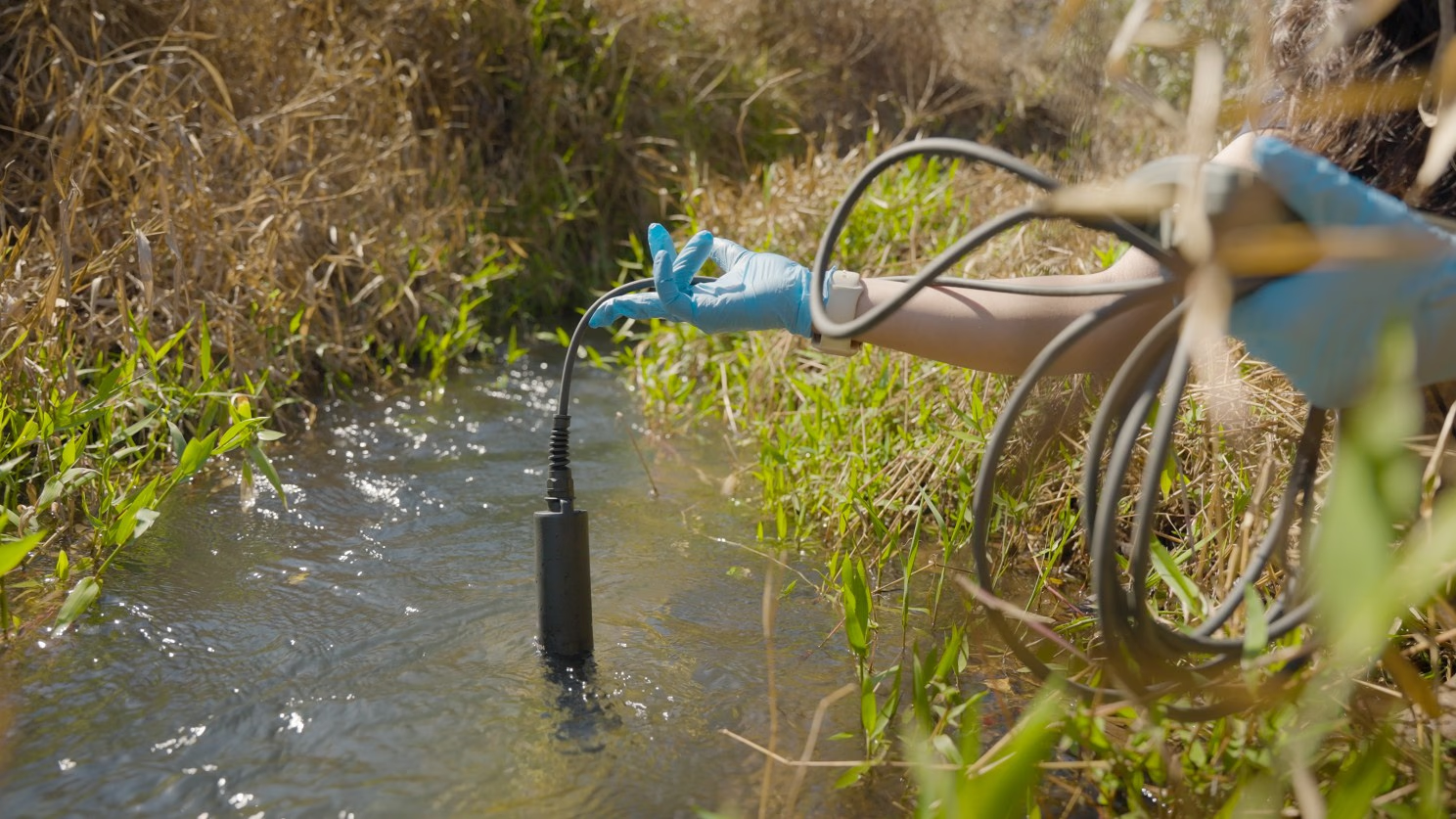
ERW company Mati Carbon was named the grand prize winner of the XPRIZE CDR competition, receiving a $50M award to advance its operations. Cascade Climate, along with the Grantham Foundation, Google, and Frontier, awarded more than $1.2 million for ERW projects in 9 different countries. Isometric verified the first-ever ERW carbon credits, issued by InPlanet, while Microsoft and Terradot set out to thoroughly test and monitor the complete CO2 journey in ERW at a soil-to-stream research site in Brazil called Sentinel.
Read more: Meet The Big Winners Of The XPRIZE Carbon Removal Competition
For marine carbon dioxide removal (mCDR), the focus this year was on fortifying the data and evidence of effectiveness and safety, with many stakeholders and authorities calling for more in-depth work in this direction.
Microsoft and Carbon Direct released new criteria for high-quality mCDR; the National Academies Ocean Studies Board and Carbon to Sea set out to establish a standing committee to regularly update a research strategy for mCDR; Fugro and Ocean Visiones partnered on an assessment framework for mCDR risks and impact, and Ocean Visions also launched an mCDR ecosystem database to streamline sector collaboration.
2025 was also marked by major agreements for nature-based credits from ARR, soil carbon, peatland restoration, and regenerative agriculture, with Microsoft, Google, Meta, and Netflix standing out among the numerous corporate buyers who backed CDR projects focused on these pathways.

As the U.S. federal government support for climate innovations faded, other countries around the world amped up efforts to take the CDR lead. Sebastian Manhart, Senior Policy Advisor at Carbonfuture, commented:
“2025 was a year full of opposites: on the one hand, we’ve seen an unprecedented attack on climate science and mitigation efforts led by the Trump administration, which has reverberated across the CDR industry and dampened investor confidence.
On the other hand, the market has grown 300%, and several countries (UK, DE, CH) have passed groundbreaking legislation in support of CDR.”
While stakeholders voiced concerns over a missed opportunity of including clear CDR rules in the $105 billion EU Clean Industrial Deal, a portion of EU CDR funding was allocated under the LIFE program, and the EU Commission adopted the first legislation and initial steps towards operationalizing the CRCF Regulation.
Manhart added,
“Looking into the future, 2026 is shaping up to be a huge year, particularly in Europe, where we will see the first CRCF units certified and a proposal for integrating CDR into the world’s largest compliance market, the EU ETS.”

In 2025, Germany, Switzerland, and Sweden saw direct governmental interest in financially backing CDR, while Norway, Sweden, Finland, Denmark, and Iceland formed the Nordic Carbon Removal Association (NCRA) to boost CDR advancement in their region.
The UK announced plans to fully integrate CDR into its ETS by 2029, while the Canadian government invested more than $9.5 million in decarbonization projects that included CDR solutions.
A November report found that even though the U.S. still leads in venture funding, Europe is on track to surpass the U.S. in total climate-tech capital deployed, while India, Southeast Asia, Latin America, and the Middle East are scaling projects faster than many developed markets.
Erin Burns stated,
“Carbon removal is entering a critical phase. Continued progress will depend on creating new and novel pathway-specific policies, sustained investment in high-integrity projects, and broader engagement from states, communities, and companies. The work we do now and in the next two years will determine whether we’re on track for key deployment goals through 2030 or forced to play catch-up.”


