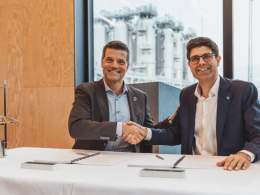
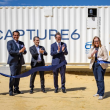




CarbonQuest has secured its first carbon capture and sequestration deployment in Canada, marking a new step in the commercial rollout of distributed carbon capture for mid-scale industrial emitters.
The project will retrofit a natural gas compression engine at the Banshee facility near Edson, Alberta, operated by Tourmaline Oil, with captured CO2 transported a short distance by pipeline for permanent geological storage.
The installation also represents CarbonQuest’s first application of its capture systems on natural gas compressors, a major source of distributed emissions across upstream gas infrastructure.
By targeting equipment that is widely deployed but rarely addressed by large, centralized CCS projects, the company is positioning distributed capture as a practical emissions reduction tool for assets that would otherwise remain difficult to decarbonize.
Partnership Model Brings New Capture Materials to Market
The project brings together partners across three countries. Canada-based Cielo Carbon Solutions is supporting deployment and sequestration pathways, while Captivate Technology is providing advanced metal-organic framework (MOF) adsorbents for the first time within a CarbonQuest system.
The MOF material is designed to improve capture efficiency and reduce the energy required to separate CO2 from exhaust streams, a key cost driver for small-scale capture applications.
Total project funding is reported at roughly CAD 4.1 million ($3 million), with around half provided through Alberta’s provincial support mechanisms.
Relevant: CarbonQuest And Daroga Launch Carbon Capture-as-a-Service Project
Backing from the province reflects continued efforts to scale carbon capture in the oil and gas sector while maintaining production and export competitiveness. For Tourmaline, the pilot forms part of a broader strategy to lower operational emissions intensity across its gas portfolio.
If successful, the Alberta deployment could serve as a template for replicating distributed capture across compressor stations and processing facilities throughout Canada’s upstream network. Developers involved in the project argue that building a pipeline of small, modular CCS installations could deliver faster emissions reductions than waiting for large, centralized hubs to reach maturity.
With sequestration infrastructure expanding in Western Canada, projects like this one are increasingly testing whether distributed capture can move from pilot stage to a commercially repeatable model for decarbonizing gas supply chains.
Read more: MOF Researchers Win 2025 Nobel Prize For Carbon Capture Breakthroughs