A consortium of six Walloon industrial and research partners has launched CO2 DISRUPT, a €5.6 million ($6.5 million) pilot project aimed at developing an economically viable solution for capturing CO2 from low-concentration industrial flue gases.
The initiative is led by ARK Capture Solutions and co-labelled by the Greenwin and MecaTech clusters with support from the Walloon government.
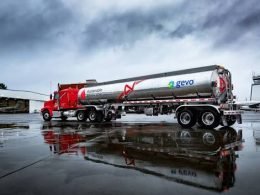
At the core of the project is a mobile capture unit, designed to collect 1-2 tons of CO2 per day directly at the chimney outlet.
The system will be tested at Aperam Châtelet, ArcelorMittal Industeel Belgium, and Cinergie Fleurus, with UMONS and Certech contributing scientific expertise in gas separation, purification, modelling and analytics.
Targeting a Major Decarbonization Gap
More than half of global anthropogenic CO2 emissions come from flue gases with concentrations between 4-15% – levels for which no commercially viable capture technology currently exists. Steel, energy, glass and petrochemicals are among the sectors most affected.
CO2 DISRUPT aims to close this gap by delivering a cost-effective capture solution capable of producing low-carbon steel, decarbonized electricity, and food-grade biogenic CO2, while advancing related industrial processes and consulting services.
For Cinergie, CO2 recovery could significantly improve the efficiency and revenue potential of Wallonia’s biomethanization sector. Aperam and Industeel see the project as a pathway to strengthen competitiveness and protect employment. ARK Capture Solutions aims to position itself as a technology leader in CO2 capture.
Relevant: Holcim Romania Carbon Capture Project Secures EU Innovation Fund Support
“This project demonstrates that Wallonia can be at the cutting edge of innovation in the field of industrial decarbonisation while creating local value”, says Aurélien Vantomme, R&D Director at ARK Capture Solutions.
Beyond emissions reduction, the project is expected to build high-value local expertise and support skilled job creation.
With global CO2 capture capacity expected to reach 4 billion tons by 2050, representing an equipment market of €1.6 trillion (~$1.85 trillion) between 2030 and 2050, partners say the project underscores Wallonia’s ambition to become a benchmark technology hub for industrial decarbonization.
Read more: Greece Advances $4.2 Billion Carbon Capture And Pipeline Project