Scientists and experts agree that carbon dioxide removal (CDR) technologies will play a vital role alongside emissions reductions in the race to reach internationally set decarbonization goals in time, before the planetary climate deteriorates to a point of no return.
But a major point of contention has emerged between short-term and durable CDR, with engineered approaches being referred to as durable solutions, while nature-based pathways are labeled short-term and overlap with longstanding efforts for forest preservation and sustainable agriculture.
Opponents of engineered solutions say they represent turning our backs to nature and a free pass for oil and gas to continue operating, while proponents claim they are the only way to rebalance the atmosphere.
We spoke with several companies and scientists to find out what the balance should be.
What Are Short-term And Durable CDR Credits?
When CDR technologies remove CO2 emissions from the atmosphere, they generate carbon credits that are then offered to buyers on the voluntary and compliance carbon markets, where each credit represents a tonne of removed carbon.
These credits, however, don’t remove the carbon from the atmosphere forever, but instead they come with a limited timeframe during which they provide a solution for storing the CO2 emissions away from the atmosphere, either in safe storage sites or in novel products.
This timeframe has led to the classification of removals in two main categories: short-term and durable. The first category keeps the CO2 stored for 10 to 100 years, while the second one does the same for over 1,000 years. Some approaches even offer a third, mid-category, that locks away carbon for 100-1,000 years.
Scientists and professionals further draw a distinction between the concept of durability, which refers to the credited CDR storage duration, or the period for which the pathway claims the CO2 will be stored, and the term “permanence,” which refers to the potential impact of human or natural disturbances on the stored carbon.
Durable removals have attracted buyers and investors with their CO2 storage longevity, lower reversal risks, and comprehensive MRV mechanisms. As effective as they are, these solutions are still carving sustainable scaling paths, hindered by steep costs and a high demand for energy and resources, commonly requiring elaborate equipment and infrastructure to operate, and offering contracted CDR volumes for future deliveries.
Short-term removals, on the other hand, come with a high scalability potential, offering faster deliveries while requiring fewer expenses for deployment and operations and contributing to meaningful ecosystem and community benefits. Their shortcomings are often centered around MRV granularity, higher risk of reversals, and increased vulnerability to natural occurrences such as fire, drought, pests, and tree mortality.
How Do Buyers Decide Between Them?
When approaching CDR, buyers and investors rely on the criteria provided by leading market bodies like the SBTi and theParis Agreement, both of which prioritize durable removals—a tendency also supported by a 2024 paper led by Cyril Brunner, whose findings indicated that a CDR storage period below 1000 years “is insufficient for neutralizing remaining fossil CO2 emissions under net zero emissions.”
Factors like these inevitably help shape CDR decisions, leading to a heightened interest in durable pathways, such as direct air capture (DAC), biochar, enhanced rock weathering (ERW), and bioenergy with carbon capture and storage (BECCS), to name a few, which in turn seems to leave short-term approaches such as ARR, peatland restoration, sustainable agriculture, and more, in the background.

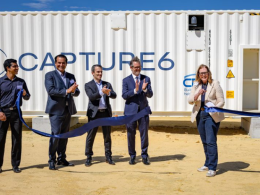
Image courtesy of Climeworks
At the same time, experts familiar with the intricacies of short-term removals advocate that these solutions could serve as a valuable tool to catalyze CDR progress while the longer-term technologies take time to advance and mature, raising awareness that they shouldn’t be dismissed solely on the basis of their shorter CO2 storage time.
In September 2025, a large group of global scientists came together in a letter addressed to the Science Based Targets Initiative (SBTi) and the United Nations’ Article 6.4 Supervisory Body, urging for the broader inclusion and incentivization of nature-based solutions in net-zero plans.
Relevant: Scientists Call For Broader Role For Natural Solutions In Climate Policy
The letter, signed by over 150 representatives from leading global institutions and organizations, including U.S. Ivy League universities and prominent academia from around the world, noted the market favoring of engineered carbon removals over nature-based ones, pointing out that this approach is wrong, as it interprets “permanence” rigidly.
This, the letter argues, leads to nature-based approaches being unfairly dismissed due to short-term CDR results, when they could be used to reduce peak emissions and gain time for durable solutions to scale.

Where Does The CDR Market Currently Stand?
A newly published State of the VCM report by Carbon Direct shows that currently, nature-based CDR is responsible for 95% of spot credits on the market, while durable pathways represent the remaining 5%. Even with this high demand for nature-based removal, the report notes that the support is still insufficient to contribute towards 2030 corporate targets if new buyers enter the market.
As discussions around the division of short-term and durable CDR grow more complex, clarity on CDR permanence was expected to come from high-profile industry meetings and events, such as the 2025 COP30 event in Brazil, but the event’s negotiators postponed these talks to this year.
In Europe, the EU Commission’s Carbon Removals and Carbon Farming (CRCF) Regulation was also expected to give more defined guidance, but so far, the publication has only made clear recognition rules for durable approaches like DACCS, BioCCs, and biochar, with further progress expected to come for carbon farming activities in the future.
Read more: EU Adopts The World’s First Voluntary Standard For Permanent CDR
In the meantime, more and more relevant industry voices are calling for a mixed CDR portfolio approach that would combine both short-term and durable removals, and many buyers and backers are already making progress in this direction, including blue-chip names like Microsoft, Meta, Google, Shopify, JP Morgan Chase, and many others, who have signed agreements with nature-based and technology-powered CDR suppliers.
An early 2025 report found that while throughout that year short-term carbon removal volumes were projected to outpace durable volumes at a 6:1 ratio, in the future, by 2050, durable CDR is expected to narrow this gap to 1.2:1, forecasting a more balanced representation of both CDR types in the coming years.
What Should A Responsible, High-quality CDR Portfolio Look Like in 2026?
We asked this question to Adrian Siegrist, the Chief Commercial Officer at trailblazing carbon removal company Climeworks.
According to him, “A high-quality carbon removal portfolio should be diversified, science-based, and durability-balanced, and designed with built-in risk mitigation to ensure reliable deliveries.”

He explained, “Climeworks’ approach to portfolios is clear: they should combine nature-based solutions (e.g., reforestation, mangroves, biochar) that offer near-term impact and broad co-benefits with engineered solutions (e.g., DAC, BECCS, enhanced rock weathering) that provide longer-term storage, low-reversal risk, and measurable, traceable outcomes. This mix reduces risk, ensures continuity of impact, and accelerates the scaling of engineered pathways essential later in the century.”
“Beyond climate impact, diversified portfolios also unlock clear economic advantages for companies: Climeworks’ Global Optimal Portfolio shows that an optimized mix of pathways can reduce removal costs, reduce risk, and speed up delivery trajectory.”
Sharing his thoughts on the claim that short-term carbon removals won’t be able to deliver net-zero-relevant scale and whether they should be used as near-term solutions, he shares,
“Short-term carbon removals such as reforestation, soil carbon, and certain nature-based pathways undeniably play a valuable role in the near term, but they cannot carry the weight of global net-zero pledges alone. Leading climate science agrees that no single carbon removal approach can scale to the multi-gigaton level required by 2050. This is why Climeworks’ Global Optimal Portfolio, which we published in 2025, emphasizes that the path to net zero is not about choosing between short- and long-term removals, but about sequencing them appropriately over time.”
Siegrist added, “Nature-based approaches deliver near-immediate climate benefit, support ecosystems, and can unlock early market liquidity. But as climate targets tighten and the need for permanent carbon removal grows, the portfolio must shift to include technologies such as DAC and BECCS, which offer long-term, measurable, and low-risk impact.”
What Is The On-the-ground Experience Of Nature-based Solutions?
We reached out to Meredith Reisfield, Senior Director of Policy, Partnerships, and Impact at carbon removal company Indigo Ag—a leading nature-based developer that has locked in three CDR agreements with Microsoft so far, including one of the largest soil carbon removal deals to date.
Relevant: Microsoft Buys New 2.85M Credits From Indigo Ag In One Of The Largest Soil CDR Deals To Date
Drawing on her experience working for this prolific company that develops U.S.-based soil-improvement projects by collaborating with local farmers and sharing profits with them while also delivering co-benefits such as watershed replenishment, Reisfield shared her thoughts on carbon removals and quality.
She observes that high-quality CDR means different things to different buyers, depending on what they value the most. Some of them are focused on cost; others are working on a portfolio that balances different considerations such as geography or removal type, or permanence and durability expectations. Then there are others who are really looking for specific community and ecosystem impacts. These buyers, she notes, may also play across a couple of these different categories.

“Ultimately, what we’re finding is really critical for quality is to be able to meet a core commonly accepted threshold, like what you see from the Core Carbon Principles (CCP) labels, and then be able to demonstrate your fit with that buyer’s approach beyond that in a really rigorous way,” she says.
In Indigo’s case, the company reaffirms its high-quality standards by demonstrating how its credits benefit rural farm communities, watersheds, and ecosystems, while leveraging scale and a large geography to manage permanence risk, with a project covering 8 million acres and engaging with thousands of partnering farmers.
“Even if individual practices change over time, working at this scale helps make an otherwise finicky pathway durable at the project level,” Reisfield adds.
On the question of what her thoughts are on the claim that short-term CDR might not be able to contribute towards net zero targets, she shares,
“I really appreciate discussions of the time value of carbon. There’s a really great TED Talk from Jonathan Foley on this that’s basically saying how quickly you bend a global emissions curve is a very important discussion for the lead-up to 2030 and 2050 and being able to look to net zero goals.
Agriculture to me is exciting because it is so quickly deployable and easy to scale. And while we are working with theClimate Action Reserve’s 100-year permanence threshold and have a durability period with Microsoft for 40 years, those are slightly different concepts for us in the market.“

“We’re able to deploy carbon removals across a really wide geographic footprint very quickly, and this ability to scale that up globally in agriculture is really exciting.
In addition to being one of the largest carbon sinks in the world, soils bring different benefits to the table, and globally, their potential is pretty significant. We know that soils and regenerative agriculture are able to remove more than 3.5 gigatons of CO2e annually, which is more than the annual 2.5 gigatons of carbon that we expect data centers to produce globally over the course of the next decade.
It’s not small math we’re working with here.”
What Does CDR Science Say?
The Nature Conservancy is a platform supporting natural climate solutions centered around ecosystems such as forests, croplands, wetlands, and grasslands by mapping out locations around the globe that offer the greatest nature-based potential per hectare of investment and providing detailed information for each selected site.
Offering a perspective from the science side of removals, Dr. Susan Cook-Patton, Lead Reforestation Scientist at The Nature Conservancy, stresses that mixed portfolios are the right path ahead, “as there is no single perfect solution.”

She explains, “On the natural climate solution side, the benefits are that they are ready and scalable now. The research and development is done, photosynthesis has been going on for millions of years, we know how to use nature to pull carbon dioxide out of the atmosphere and lock it into relatively persistent stores, and they come with all the co-benefits such as the potential clean air, clean water, habitats for biodiversity, et cetera.
But they are based on a natural system, so it can be disturbed, and that carbon can be released back into the atmosphere. There are mechanisms in place and additional innovations to help ensure that longevity, but when you’re thinking about CO2 emissions, while the CO2 drops fairly soon after about 100 years, the warming, which is what we really care about, can last thousands of years. And it’s very hard to build mechanisms like buffer pools that are going to work for 1000+ years.
Whereas on the other hand, you’ve got technological removals, and there’s still a lot of research and development that we need to get them to scale, but right now, they just represent expensive drops in the bucket of mitigation that we need. I think the balance is nature now, machines later. We really need something now so that we avoid even more catastrophic warming, which then triggers crossing thresholds and tipping points and releasing even more carbon from the natural land.”
Commenting on the way the market has evolved in recent years, she shares, “One positive movement I’m seeing is that before, you could either be permanent or not permanent; it was this dichotomy, and that just doesn’t reflect the reality of the situation. We have a range of options, and they have a range of durability.
What we need is a portfolio of options that offer that range of durability, that offer a range of co-benefits, and that are available at different price points to really balance the different sorts of risks and benefits that we might want to achieve.”
On the question of what are the biggest risks that need to be addressed, she says that to her, the biggest risk is the risk of inaction, where people are so concerned about durability that they do nothing.
“The analogy that I like is if our house is on fire now, which it kind of is with climate change, do we use sort of the leaky hose that’s available now, or do we wait 10 years for the state-of-the-art fire truck to show up? I kind of feel that is what we’re doing. We have a climate crisis now. We have a tool that will work. Is it perfect? No. There’s no perfect solution that we currently have. But our house is going to be burned down if we wait for the state-of-the-art fire truck. So action—what people should be doing is action.
What Needs To Happen Next?
Across sector discussions, a recurring leitmotif is the need for the carbon removal industry to reassess the binary understanding of short-term and durable solutions, as this could potentially give way to more immediate climate action.
While buyers and investors will continue assessing CDR quality through their in-house priorities prism, the baseline quality of carbon removals should be defined by the current established standards, such as the Core Carbon Principles (CCP) and the criteria laid out for specific methodologies by the leading market registries, keeping in mind not only the storage time and decarbonization impact but also the potential co-benefits that can be unlocked through each CDR approach.
Instead of looking at short-term and durable solutions in an either-or perspective, buyers should work on combined portfolios, as this mixed approach can deliver near-term decarbonization progress while more demanding technologies take time to refine their solutions.
Bolder buyer activity across CDR pathways can be catalyzed by clearer rules and policy guidelines, which would further stimulate an already evident trend of corporate players betting on combined portfolios of nature-based and engineered removals, which not only delivers a wider spectrum of benefits but also helps derisk these kinds of investments.